Is Your Child Zoning Out or Just Wired Differently? Understanding Learning Styles in Your Homeschool
Not all kids learn the same - and that’s actually the point of homeschooling! In this light-hearted and relatable post, we break down the four main learning styles (Visual, Auditory, Read/Write, and Kinesthetic) in plain English, with real-life clues to help you identify your child’s natural strengths. Whether you're a brand-new homeschooler or a veteran needing a reminder, this post will help you better understand how your child thinks... and how to teach them in a way that actually works. Bonus: free quizzes included to help you figure it out!
STUDENT ENGAGEMENTGETTING STARTEDHOMESCHOOL LIFEENCOURAGEMENT & MINDSET
By Jennifer Kost | Homeschool Unshaken
8/7/20253 min read
Homeschooling gives us so many beautiful freedoms - flexible schedules, tailor-made lessons, and learning in pajamas. But one of the biggest advantages (that often gets ignored) is this: you get to teach in a way that actually makes sense for your child.
Wild concept, right?
And yet... even seasoned homeschoolers sometimes fall back into old habits - teaching how we were taught, using one-size-fits-all curriculum, or assuming that if our kids don’t “get it” the first time, they’re just not trying hard enough.
But what if your child’s not behind... they’re just wired differently?
Let’s talk learning styles - what they are, why they matter, and how understanding them might just save your homeschool (and your sanity).
What Are Learning Styles, Anyway?
At the most basic level, learning styles are just the natural ways people
prefer to take in and process information.
There are many theories and models, but one of the simplest and
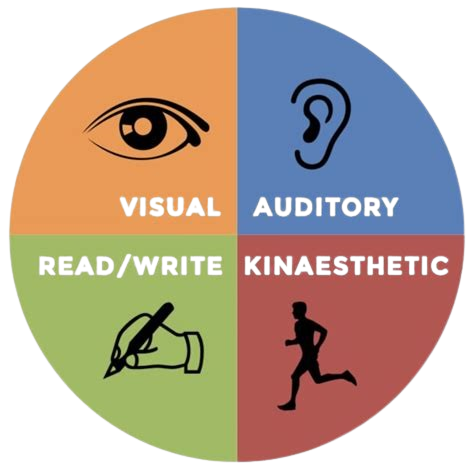
most widely used is the VARK model. It breaks learners down into four main types:
Visual Learners (AKA “Let me see it”)
These are your picture-loving, diagram-studying, color-coding, mind-mapping kids.
They learn best through images, charts, videos, and spatial understanding.
Clues your child might be a visual learner:
Loves drawing, sketching, or building models
Remembers faces more easily than names
Says “Can I see it?” or doodles while you talk
Struggles when information is only spoken aloud
📝 Pro tip: Use colorful posters, flashcards, whiteboards, and visual schedules. Bonus if they help create them!
Auditory Learners (AKA “Talk it out”)
These kiddos thrive when they can hear the material - through songs, read-alouds, discussions, or lectures.
Clues your child might be an auditory learner:
Talks. Constantly. Even when they’re alone.
Remembers things you said more than what they saw
Asks questions out loud to process ideas
Loves rhymes, songs, or storytelling
📝 Pro tip: Try read-alouds, educational podcasts, audiobooks, or even having them talk through answers. Also: prepare for lots of talking.
Read/Write Learners (AKA “Give me a book and a pen”)
These learners shine when they’re allowed to read and write their way through concepts. Text is their happy place.
Clues your child might be a read/write learner:
Loves reading and journaling
Writes lists or takes notes naturally
Enjoys written instructions more than verbal ones
Uses words like “explain” or “define”
📝 Pro tip: Use workbooks, written assignments, and independent research projects. They might actually like outlining an essay. (Imagine that.)
Kinesthetic Learners (AKA “Can I do it?”)
Hands-on and always on the move, these learners process best when they’re moving, building, touching, or experiencing.
Clues your child might be a kinesthetic learner:
Builds things constantly (from LEGOs to elaborate couch forts)
Fidgets during read-alouds or instruction
Struggles to sit still but can focus while moving
Learns best by trying, not watching
📝 Pro tip: Incorporate experiments, movement breaks, real-world projects, and manipulatives. And don’t panic if math happens on the trampoline.
But What If My Child Is More Than One?
Most people are a mix! And that’s okay... the goal isn’t to lock your child into a box. It’s to understand what clicks with them so you can lean into it when it matters most.
Same goes for you, by the way.
I personally discovered I am not cut out for center-based curriculum with 14 bins and a rotation chart. (I tried. It broke me.) But I am great at unit studies and guided checklists. I play to my strengths now. You should too.
How to Figure Out Your Child’s Learning Style
If you already had three lightbulb moments reading the above descriptions, trust your gut.
But if you want something more structured, here are a few free quizzes you can take with your child:
🎯 Learning Style Quiz (EducationPlanner.org)
https://www.educationplanner.org/students/self-assessments/learning-styles-quiz.shtml
Quick and kid-friendly, perfect for ages 8+
🧠 VARK Questionnaire for Younger Learners
https://vark-learn.com/the-vark-questionnaire/
Has a version specifically for children and teens
✏️ Homeschool On’s Learning Style Quiz (for fun)
https://homeschoolon.com/learning-style-quiz/
A bit more playful, ideal for homeschool parents
Final Thoughts (And a Little Pep Talk)
You’re not doing it wrong if something doesn’t work. You’re probably just doing it your child’s way... instead of your child’s actual way.
Homeschooling isn’t about mimicking public school with better snacks. It’s about customizing education to your family’s rhythms and personalities.
So take a deep breath. Take the quiz. Laugh at how spot-on it is. And then try one small change tomorrow to see if it helps things go a little smoother.
You’ve got this. You’re not just teaching reading and math... you’re learning how to raise a human in a way that actually honors who they are.
And that’s kind of a big deal. 💛
Want More Encouragement Like This?
Stick around. Homeschool Unshaken is just getting started.
Check out the blog, grab a few free resources, or come laugh with us on Facebook.
You're not alone... and you're doing better than you think. 💪